



Five Key Technical Parameters to Consider When Procuring Industrial Large-Format SLA 3D Printers
4 July 2026
Industry Insights
Industrial large-format SLA printer procurement should prioritize optical precision, system stability, and production consistency across extended manufacturing cycles, which together form the foundation of reliable output for manufacturing, 3D printing service, and arts applications.
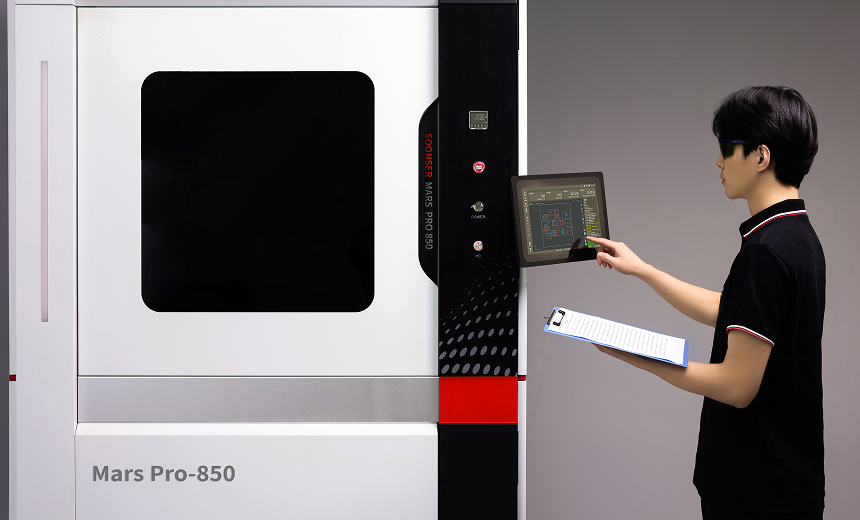
From a practitioner’s perspective, we often evaluate equipment not only by its positioning but by how it behaves under continuous workload. In our experience at Soonser, selection decisions are rarely isolated from real production environments. This is where industrial sla printer specification becomes a structured reference point, helping us compare system capabilities in a more disciplined way. At the same time, sla 3d printer procurement requires a broader view that includes workflow integration and long-term operational stability.
Optical System Precision and Light Control
One of the first aspects we examine is the optical engine, as it directly influences surface detail and dimensional consistency. High-quality SLA systems rely on stable light sources and controlled exposure distribution to ensure consistent curing behavior across large build platforms.
In practical applications, industrial sla printer specification often highlights parameters such as exposure uniformity and light modulation control, which are critical when producing fine geometries or complex surface textures. Within our workflows at Soonser, these factors are particularly relevant for users in product prototyping and artistic modeling, where surface fidelity is a key requirement. During sla 3d printer procurement, we also consider how well the optical system maintains stability over long print durations, especially in service bureau environments where uptime is essential.
Mechanical Structure and Platform Stability
Beyond optics, mechanical rigidity plays a central role in maintaining dimensional accuracy throughout the print process. Large-format SLA systems must resist vibration and maintain consistent layer alignment, particularly when handling taller builds or dense batch production.
Here, industrial sla printer specification typically includes structural design elements such as frame rigidity, Z-axis movement stability, and recoating consistency. These elements directly affect part repeatability, which is essential for manufacturing users producing functional prototypes or end-use components. When evaluating sla 3d printer procurement, we often emphasize how mechanical design interacts with resin behavior, ensuring smooth layer transitions without visible artifacts. At Soonser, this balance between structure and motion control is frequently a deciding factor for production-focused clients.
Workflow Integration and Production Efficiency
Another critical area is how well the printer integrates into existing production workflows. For industrial users, efficiency is not only about print speed but also about preparation, post-processing compatibility, and system usability.
In this context, industrial sla printer specification often extends beyond hardware to include software ecosystem performance, file handling capacity, and slicing workflow stability. These elements influence how quickly teams can move from design to production. During sla 3d printer procurement, we also assess how the system supports batch management and multi-job scheduling, which is especially relevant for service providers handling diverse client demands. At Soonser, we have seen that smoother workflow integration often translates into more predictable production planning and reduced operational friction.
Material Handling and Application Flexibility
Material adaptability is another factor that should not be overlooked. SLA systems are frequently used across industries with different resin requirements, from engineering-grade materials to artistic casting resins.
Within industrial sla printer specification, material compatibility indicators help determine whether the system can support a wide range of resin properties without compromising print quality. This becomes particularly important for users operating in both prototyping and creative sectors. In sla 3d printer procurement, we also consider how material handling systems reduce waste, simplify resin changes, and maintain cleanliness during operation. From our perspective at Soonser, flexibility in material usage often defines how broadly a printer can be applied across different project types.
System Reliability and Operational Consistency
Long-term reliability is a defining requirement for industrial SLA environments. Equipment must maintain consistent output quality even under continuous or high-frequency usage scenarios.
In many cases, industrial sla printer specification includes durability metrics, component lifespan considerations, and maintenance cycle design. These factors influence downtime and overall productivity. During sla 3d printer procurement, we pay close attention to how easily critical components can be serviced and how predictable maintenance schedules are over time. At Soonser, we have observed that stable operational performance is often what differentiates suitable production equipment from occasional-use systems.
Conclusion
Ultimately, evaluating industrial SLA equipment requires a balanced focus on optics, mechanics, workflow, materials, and reliability, all of which shape long-term production performance in demanding environments, and this is why Soonser continues to emphasize structured assessment criteria for professional users.
When we approach sla 3d printer procurement, we consistently return to these five technical parameters to ensure that production goals align with system capabilities. A clear interpretation of industrial sla printer specification allows manufacturers, service providers, and creative professionals to make more consistent and practical decisions that support sustained output quality, and Soonser remains closely aligned with these priorities in industrial applications.

