



Industrial SLA and LCD 3D Printing Systems, Which Is More Suitable for Outsole Mass Production?
24 May 2026
Industry Insights
For footwear manufacturers evaluating digital production tools, the choice between an SLA 3D printer and an LCD 3D printer often depends on stability, production consistency, and surface accuracy. At SoonSer, we work with industrial users who need reliable additive manufacturing systems for outsole development and validation. In real production environments, both technologies are used for prototyping and tooling workflows, but their performance characteristics differ in ways that directly affect footwear manufacturing efficiency and repeatability.
Production Stability in Footwear Development
When discussing SLA 3D printer performance in outsole applications, stability across long printing cycles becomes an important factor for manufacturing teams. Our systems are designed to support continuous operation during detailed mold production, especially in footwear design iterations where multiple revisions are common. On the other hand, an LCD 3D printer typically focuses on resin exposure through screen-based curing, which allows efficient part generation for specific use cases. At SoonSer, we observe that manufacturing teams often evaluate both technologies based on workflow integration rather than isolated print speed, since outsole design requires consistent geometry reproduction across multiple prototypes. The balance between accuracy and production repeatability plays a key role in selecting the appropriate system for industrial environments.
Material and Detail Requirements for Outsole Manufacturing
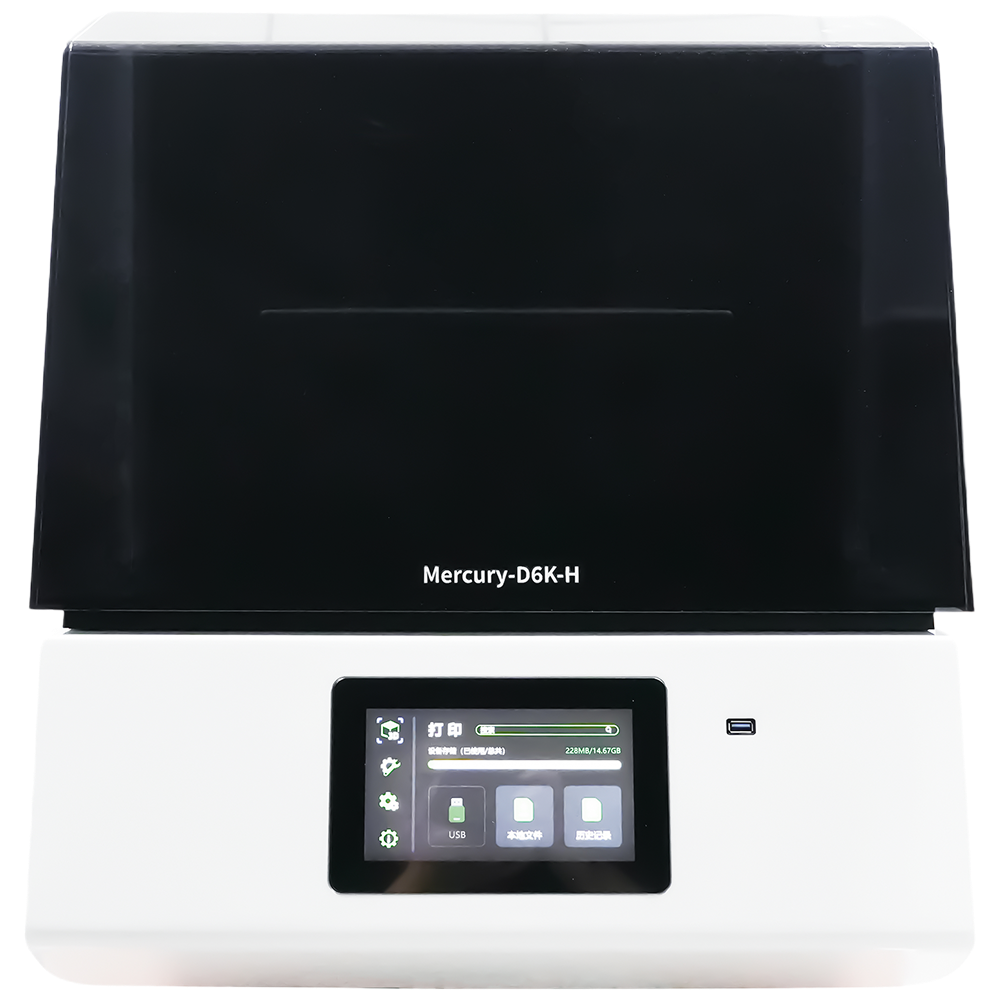
In outsole manufacturing, fine texture and structural clarity directly influence testing and design validation. An SLA 3D printer provides controlled laser-based curing, which supports smooth surface output and detailed tread structures often required in footwear mold development. Meanwhile, an LCD 3D printer such as our Mercury D6K series is commonly used for efficient resin-based printing tasks in prototyping workflows where speed and accessibility are important. The Mercury D6K is designed for industrial resin applications, supporting users who require consistent printing performance in compact production environments. At SoonSer, we focus on ensuring that both systems can integrate into different stages of footwear development, from early concept validation to detailed outsole structure testing.
Application Differences in Industrial Environments
In industrial production settings, the decision between SLA 3D printer and LCD 3D printer is often influenced by production scale and workflow requirements rather than a single technical factor. Footwear manufacturers, service bureaus, and design studios evaluate how each system fits into their production pipeline. Our experience shows that SLA systems are frequently used for precision-driven mold development, while LCD systems are applied in flexible prototyping environments where rapid iteration is needed. SoonSer provides both types of solutions to support different stages of outsole development, helping users align equipment capability with practical production demands.
Conclusion: Matching Technology with Production Needs
For outsole mass production scenarios, there is no universal answer between SLA 3D printer and LCD 3D printer. Each technology serves a different role in the footwear manufacturing workflow. At SoonSer, we help users evaluate production requirements based on stability, detail accuracy, and workflow compatibility rather than focusing on a single equipment type. The Mercury D6K LCD system supports flexible resin printing needs, while SLA systems provide stable precision for detailed mold structures. Ultimately, selecting between SLA 3D printer and LCD 3D printer depends on how each stage of production is structured within modern footwear development.

