



Why Precision Automotive Sensor Housings Rely on Laser SLA Technology
25 May 2026
Industry Insights
For automotive development teams, accuracy in sensor housing design is not optional but part of functional reliability. We at SoonSer work with manufacturers who require stable prototyping and consistent dimensional control for sensitive components. A high precision SLA 3D printer provides the level of detail needed to support structural verification, while a laser SLA 3D printer helps ensure smooth surface quality and repeatable part performance. In automotive sensor housing development, even small deviations can affect assembly fit and signal alignment, which is why laser-based SLA processes are widely used in early-stage validation and functional modeling.
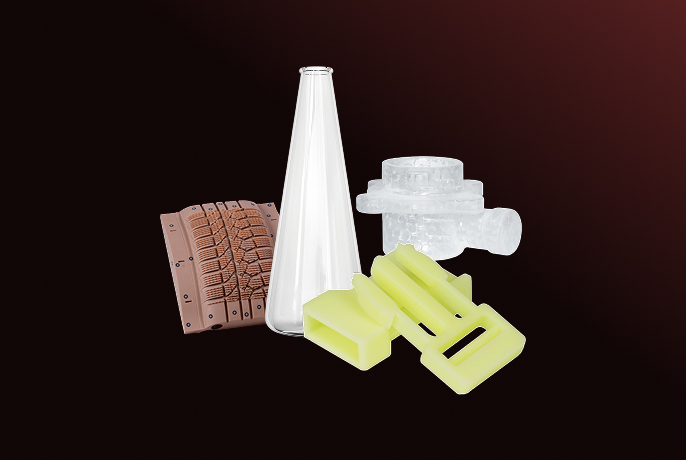
Dimensional Stability for Functional Fit
In automotive applications, sensor housings must align precisely with electronic modules and mounting structures. We use a high precision SLA 3D printer to support this requirement by maintaining consistent layer accuracy during complex geometries. When working with tight tolerances, the stability of a laser SLA 3D printer becomes important because it helps reduce variations during long printing cycles. For manufacturing teams in automotive and electronics industries, this process is not only about creating prototypes but also about validating assembly behavior before moving to mass production. At SoonSer, we focus on supporting workflows where repeatability and structure integrity matter more than rapid design changes.
Surface Quality and Assembly Performance
Sensor housings often require smooth surfaces to ensure proper sealing and reduce friction during installation. A laser SLA 3D printer supports this requirement by producing fine surface finishes that reduce post-processing effort. In combination with a high precision SLA 3D printer, manufacturers can evaluate both internal structures and external fit during early testing phases. The Mars Pro Series is commonly used in these scenarios, supporting SLA-based prototyping for automotive components that require stable geometry verification. This system helps engineering teams evaluate enclosure behavior, mounting interfaces, and structural consistency in a controlled production environment without introducing unnecessary complexity.
Application in Automotive Development Workflow
Within automotive development workflows, sensor housings are often tested across multiple iterations. We use a high precision SLA 3D printer to help engineering teams iterate designs without compromising dimensional consistency. At the same time, a laser SLA 3D printer supports the production of detailed prototypes that reflect final design intent more closely. This combination allows manufacturers to assess mechanical fit, assembly alignment, and structural reliability before tooling decisions are made. SoonSer systems are designed to integrate into these iterative workflows, especially for manufacturers working in electronics integration, vehicle sensing systems, and functional testing environments.
Conclusion
Precision automotive sensor housings require controlled manufacturing processes that can support detailed structural validation. A high precision SLA 3D printer ensures dimensional accuracy during prototyping, while a laser SLA 3D printer supports surface quality and repeatable output for functional testing. At SoonSer, our SLA systems, including the Mars Pro Series, are used to support automotive manufacturers in developing reliable sensor housing structures through stable and repeatable additive manufacturing workflows.

