



How We Approach a Seamless Workflow Toward a “No-Man Factory” Pipeline
22 May 2026
Industry Insights
For manufacturers asking how to build a more continuous production environment, the key is not only printing speed but also workflow coordination. At SoonSer, we focus on how SLA-based systems can be connected with downstream steps to support a more structured production flow. When discussing industrial 3D printing automation, we emphasize that automation is not a single machine function but a connected process between printing, handling, and post-processing. This approach also depends on 3D print management, which helps teams organize tasks, monitor progress, and maintain consistency across multiple production jobs. In real manufacturing environments, especially in automotive, electronics, and footwear industries, this coordination is often what determines whether a semi-automated workflow can move closer to a continuous system.
Connecting Printing Systems with Production Flow
In many factories, the transition from printing to post-processing is still handled manually, which can slow down the overall workflow. Our systems are designed to support more structured task allocation through industrial 3D printing automation, allowing print jobs to be managed in a more organized sequence. At the same time, 3D print management tools help operators track file preparation, job scheduling, and machine status in a unified environment. At SoonSer, we design our SLA equipment with operational stability in mind, so production teams can reduce unnecessary interruptions during long printing cycles. This stability becomes especially important when multiple devices are running in parallel, where coordination between machines and workflow planning is essential for maintaining consistent output quality.
Software Layer Supporting Workflow Coordination
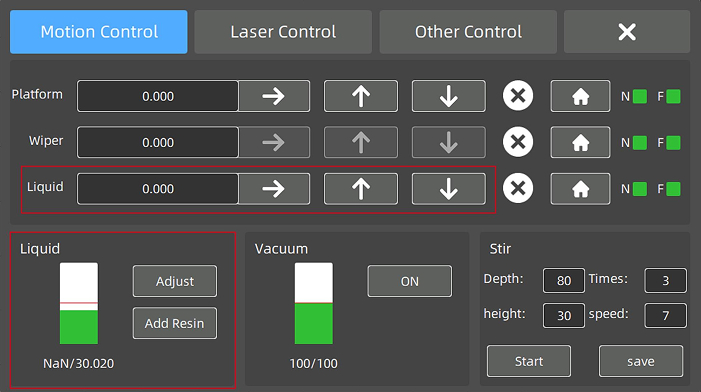
Beyond hardware, workflow optimization also depends on software integration. Through our supporting platform available on the SoonSer software system page, users can manage printing tasks and organize production schedules more efficiently. This is where 3D print management plays an important role, as it allows manufacturers and service providers to handle multiple projects without losing visibility over job status. Combined with industrial 3D printing automation, the software layer helps connect different stages of production, making it easier for teams to align printing tasks with downstream handling processes. In practice, this reduces communication gaps between operators and improves coordination in environments where multiple materials, models, and design revisions are processed simultaneously.
Toward a More Connected Manufacturing Environment
The idea of a fully “no-man factory” is not only about removing operators but about reducing unnecessary manual transitions between processes. With SoonSer systems, manufacturers can gradually build a more connected workflow where printing and post-processing are better aligned. The combination of industrial 3D printing automation and 3D print management supports this transition by improving visibility and coordination across production stages. For 3D printing service providers and industrial manufacturers, this structure helps maintain a more predictable workflow, especially when handling repeated production tasks or customized short-run manufacturing.
Conclusion
Achieving a seamless pipeline from printing to post-processing depends on workflow structure, system stability, and management tools working together. At SoonSer, we focus on supporting this transition through coordinated equipment and software solutions that help users move toward more efficient production environments. As industrial 3D printing automation and 3D print management continue to develop, manufacturers are able to build workflows that reduce manual gaps and improve overall production consistency.

