



How Does the Automotive Industry Use 3D Printing in Modern Manufacturing Workflows
21 May 2026
Industry Insights
For us, the automotive sector uses additive manufacturing as a practical method to support design validation, functional prototyping, and production preparation. When discussing how does the automotive industry use 3D printing, the focus is not only on speed but also on repeatability and part consistency. At SoonSer, we work with manufacturers and service providers who rely on stable SLA systems to evaluate components before moving into tooling or mass production. In this workflow, SLA 3D printer for automotive applications plays a key role in helping teams test geometry, fit, and surface quality during early-stage development. At the same time, customized car parts 3D printing is increasingly used to support flexible design iteration, especially when different models or small-batch components are required for validation or demonstration purposes.
Automotive Prototyping and Design Verification
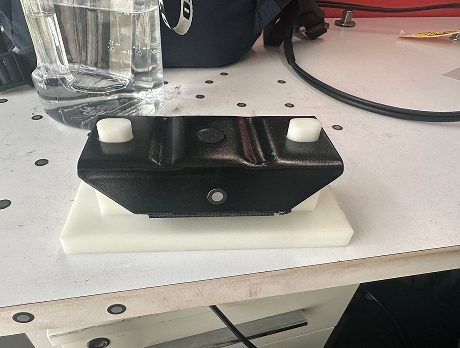
In our experience working with industrial users, how does the automotive industry use 3D printing often starts with prototyping. Engineers use SLA-based systems to produce exterior panels, interior components, and functional test models before finalizing designs. With SLA 3D printer for automotive, we help teams create detailed parts that reflect fine surface structures and complex geometries, which are important in design evaluation. Meanwhile, customized car parts 3D printing allows designers to quickly adjust features such as clips, housings, or interface structures without waiting for traditional tooling changes. This approach supports more flexible development cycles while maintaining consistency in testing conditions. For automotive R&D departments, this workflow reduces the gap between digital design and physical verification.
Manufacturing Support and Small-Batch Production
Beyond prototyping, how does the automotive industry use 3D printing also extends into small-batch manufacturing and tooling assistance. Many manufacturers use SLA output to create jigs, fixtures, and assembly aids that support production lines. In these scenarios, SLA 3D printer for automotive systems provide stable output performance that can be integrated into repeated production tasks. At SoonSer, we also see increasing demand for customized car parts 3D printing in aftermarket design, concept vehicles, and limited-edition components where traditional mass production is not necessary. The automotive applications we support on our platform show how SLA technology fits into both development and practical manufacturing environments, especially when design flexibility is required.
Application Value in Automotive Innovation
As automotive companies continue refining product cycles, how does the automotive industry use 3D printing becomes a question of efficiency and adaptability rather than experimentation alone. Our systems are designed to support this shift by maintaining consistent print quality for iterative design work. A SLA 3D printer for automotive helps reduce the time between design updates and physical testing, while customized car parts 3D printing supports more flexible experimentation with shapes, assemblies, and functional prototypes. In SoonSer automotive applications, SLA technology is used across different stages of product development, from early concept modeling to final validation parts, allowing teams to adjust designs with fewer physical constraints.
Conclusion
In summary, how does the automotive industry use 3D printing is closely connected to prototyping efficiency, design flexibility, and small-batch production needs. At SoonSer, we continue to support these workflows through SLA-based systems that enable reliable production of detailed automotive parts. With SLA 3D printer for automotive and customized car parts 3D printing, manufacturers and service providers can better align digital design with physical testing and application requirements in modern automotive development.

