



How to 3D Print Resin for Industrial and Creative Applications
19 May 2026
Industry Insights
For many manufacturing teams and 3D printing service providers, understanding how to 3D print resin is closely related to achieving stable output, consistent detail, and predictable workflow performance. At SoonSer, we focus on industrial equipment that supports practical production needs rather than experimental usage. resin 3D printing is widely applied in automotive parts development, electronic product prototyping, footwear modeling, and artistic structure creation. In real production environments, the process requires controlled exposure, stable mechanical movement, and reliable system calibration to ensure repeatable results across different build jobs.
Preparing a Stable Workflow for Resin Printing
When explaining how to 3D print resin, the preparation stage is often the most important part of the workflow. Our approach emphasizes system stability, material compatibility, and file integrity before printing begins. In resin 3D printing, digital models must be properly oriented and supported to reduce deformation during curing. The printing environment also needs to maintain consistent operational conditions so that each layer is formed evenly. For manufacturing users, this step is essential because unstable preparation can directly affect downstre
am assembly or testing processes. Our equipment is designed to help users maintain predictable workflow behavior without unnecessary interruptions during long production cycles.
High Precision Output in Industrial Applications
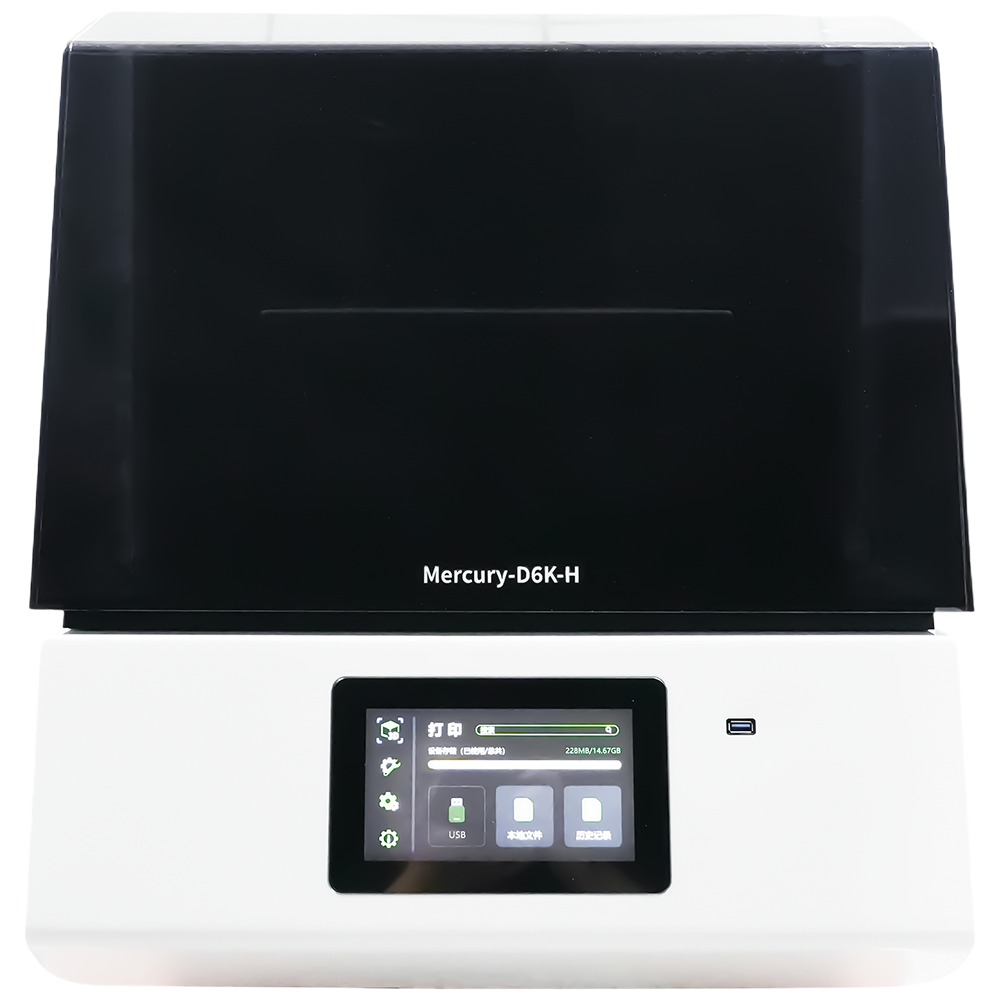
In industrial environments, high resolution resin 3d3D printer systems are often used when surface quality and dimensional accuracy are required. Our Mercury D6K LCD system is designed for detailed model production, supporting users who work with complex geometries in engineering, design studios, and 3D printing service operations. In resin 3D printing, resolution plays a key role in determining whether a prototype can meet inspection or functional verification needs. As part of how to 3D print resin, the printing stage involves controlled exposure and layer-by-layer curing, which helps maintain fine structural consistency. For users working in automotive or electronic applications, this level of precision supports more efficient design iteration and model validation processes.
Material Handling and Production Considerations
Understanding how to 3D print resin also involves managing material handling and post-processing steps. After printing, parts need to be properly cleaned and cured to achieve stable mechanical properties. In resin 3D printing, post-curing ensures that printed components reach their expected performance level before being used for testing or presentation. A high resolution resin 3D printer supports this workflow by producing cleaner surface details, which reduces finishing effort in later stages. At SoonSer, we design our systems to support users who require repeatable output across multiple production batches, especially in service bureaus and industrial development teams.
Conclusion: Practical Resin Printing in Real Production
Learning how to 3D print resin is not only about operating a machine but also about understanding the full production workflow from preparation to post-processing. Through resin 3D printing, manufacturers and designers can create detailed prototypes that support real decision-making in product development. A high resolution resin 3D printer such as the Mercury D6K helps users maintain consistent output quality while supporting industrial and creative applications. At SoonSer, we continue to focus on providing stable and practical equipment solutions that align with manufacturing, service, and artistic production needs.

