



How Is 3D Printing Used in Industrial Design
17 April 2026
Industry Insights
High-quality industrial design relies on the seamless integration of speed and precision to move from a concept to a functional reality. We have observed that at Soonser, the most successful design teams use industrial 3D printing to bypass the long wait times associated with traditional tooling. By bringing production in-house, designers can physically test ergonomics and mechanical fit within hours rather than weeks. This shift allows for more frequent iterations, which means the final product is often more refined and better suited for the end-user. For us, providing the right hardware means giving creators the freedom to fail fast and succeed faster without the high costs of CNC machining for every minor tweak.
Achieving Dimensional Accuracy in Prototyping
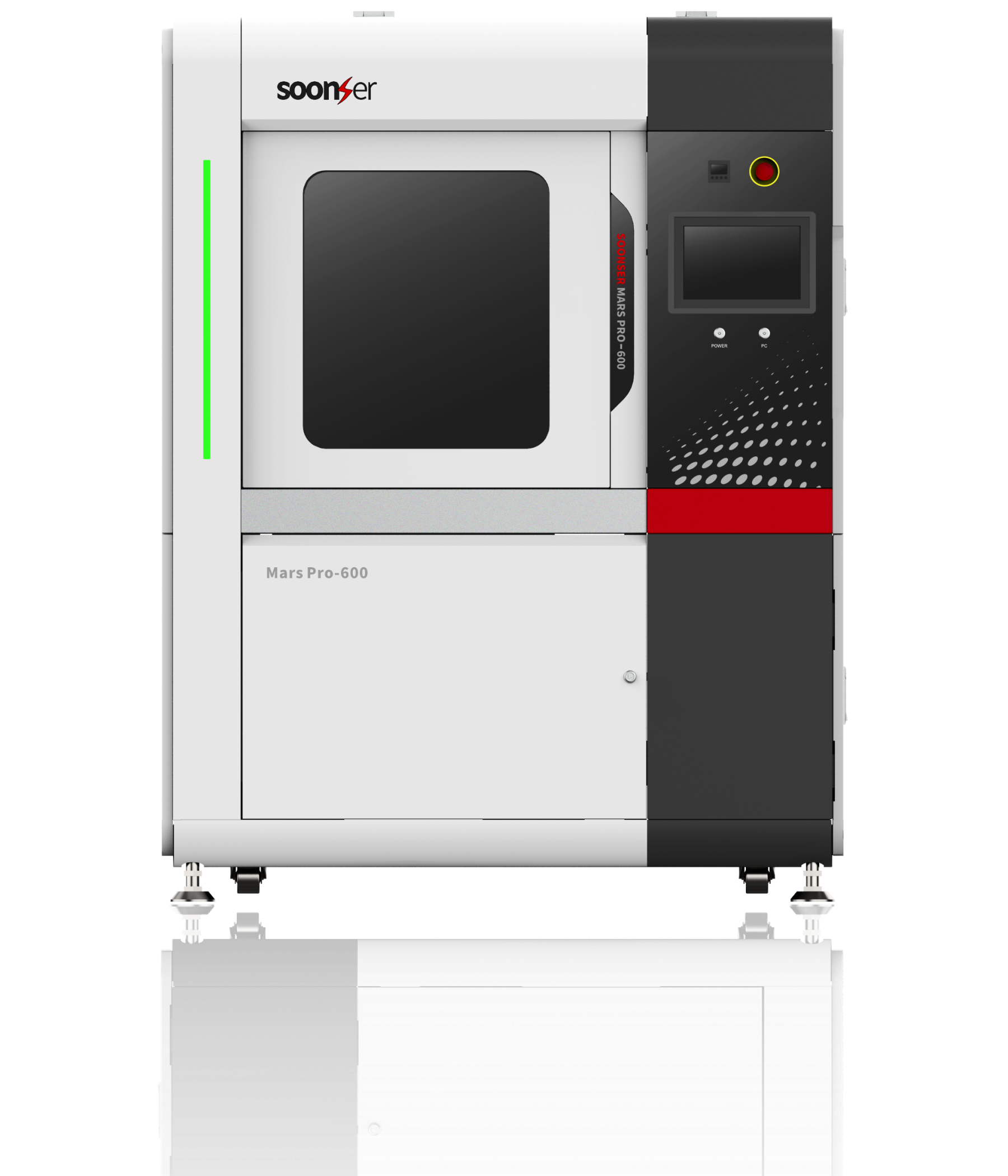
Precision is the heartbeat of any industrial project, especially when parts must fit together with microscopic tolerances. When we deploy 3D printing for industrial use, we focus heavily on the stability of the movement system to ensure every layer aligns perfectly. Our Mars Pro series, for example, utilizes a marble platform to minimize vibration, which is a detail that designers in the automotive and aerospace sectors appreciate when they need parts to snap together perfectly. Having a high-precision 3D printer on the factory floor means that a design for a complex manifold or a sleek casing can be verified for its physical properties immediately. We see designers use these accurate models to check airflow, assembly sequences, and even aesthetic light reflections before committing to mass production.
Enhancing Workflow with Large-Scale Capacity
Scale used to be a significant barrier in the design world, forcing teams to print parts in small pieces and glue them together. We changed that by offering machines that handle massive build volumes, allowing for industrial 3D printing of full-scale interior panels or large architectural models in a single piece. This capability removes the structural weaknesses found at seams and gives a much more accurate representation of the final product's strength. When a service bureau uses our 3D printer models, they can offer their clients the ability to see a full-size prototype of a chair or a car dashboard overnight. This physical presence helps stakeholders make faster decisions, as they can touch and feel the scale of the object rather than just viewing a 3D render on a screen.
Material Flexibility for Functional Testing
The ability to switch between different resins and materials is what truly makes 3D printing for industrial applications an innovation for modern workshops. We provide a range of materials that simulate everything from high-temperature-resistant plastics to flexible elastomers, allowing designers to test how a product will actually perform in the real world. For example, if we are helping a footwear designer, they might use a flexible resin to test the "cushion" of a sole, while a machinery designer might use a tough, impact-resistant resin for a jig. Our high-precision 3D printer technology ensures that regardless of the material used, the fine details—like textures or thin walls—are preserved perfectly. This versatility ensures that the printer isn't just a prototyping tool, but a bridge to final manufacturing.
Integrating advanced printing technology into the design process is about more than just making models; it is about reclaiming time and ensuring quality. We at Soonser take pride in building machines that support the rigorous demands of the manufacturing and arts sectors, ensuring that every project is backed by mechanical stability. By utilizing industrial 3D printing, businesses can reduce waste and focus their energy on creative problem-solving. We are here to ensure that your equipment is as ambitious as your designs, providing the consistency needed to produce professional-grade results every time.

