


Safety Measures for Resin 3D Printing: Protecting Yourself and Your Workspace
16 April 2026
Industry Insights
In the rapidly evolving world of 3D printing, resin-based printers like the SoonSer Mercury-D6K-H are becoming increasingly popular for their high precision and ability to create intricate designs. However, while these machines provide exceptional results, it's essential to keep safety at the forefront of every project.
Whether you're in manufacturing, resin 3D printing safety, or the arts, adhering to proper safety protocols ensures a smooth and risk-free experience.
For professionals using a resin 3D printer for rapid prototyping, or other precision applications, understanding how to handle resin, operate the printer, and maintain the equipment is essential for a safe and consistent resin 3D printing workflow.

Recognizing Potential Risks in Resin 3D Printing
Resin 3D printers, such as the SoonSer Mercury-D6K-H, present unique challenges compared to other printing technologies.
One major concern is the handling of 3D printing resin itself. Resin can be harmful if it comes into direct contact with the skin or is inhaled in significant quantities. To mitigate this risk, users should always wear protective gloves and safety glasses when handling the resin.
Furthermore, the resin 3D printing environment must be well-ventilated, as the fumes from uncured resin can pose health risks.
At SoonSer, we recommend using the Mercury-D6K-H in a well-ventilated area to minimize exposure to these potentially harmful fumes.
When setting up a desktop resin 3D printer, users should also keep resin containers closed when not in use and maintain a clean, organized printing area. Following the resin manufacturer's handling recommendations is also important for establishing a safer and more controlled printing workflow.
Safe Handling of Resin and Post-Printing Procedures
After printing, handling resin 3D printed parts carefully is crucial for safety.
The SoonSer Mercury-D6K-H resin 3D printer produces highly detailed and sharp designs that require proper curing to avoid residual uncured resin. It's essential to wash the printed parts thoroughly to remove any excess uncured resin before they are exposed to UV light for curing.
Additionally, we suggest using a dedicated curing station to ensure that the curing process is efficient and safe.
Taking these precautions will help protect both the user and the finished product from potential safety issues.
A consistent resin 3D printing workflow should include three key stages: printing, cleaning, and post-curing. Proper handling at each stage can reduce unnecessary contact with uncured resin while helping maintain the quality of the final part.
For professional users, choosing a high-precision resin 3D printer can also support a more consistent printing workflow, particularly when producing detailed prototypes, or other precision parts.
Regular Maintenance for Safety and Performance
Maintaining your resin 3D printer is just as important as using it correctly.
The Mercury-D6K-H, like all resin 3D printers, requires regular cleaning and maintenance to function optimally and safely. This includes checking for resin buildup, ensuring the resin vat is intact, and confirming that the printing platform is securely mounted.
At SoonSer, we prioritize ease of maintenance in our design process, ensuring that users can easily perform these checks without risking their safety or compromising the printer’s performance.
Regular maintenance is particularly important when operating a professional resin 3D printer frequently. Checking the resin tank, build platform, and other printing components before and after repeated printing jobs can help maintain consistent results and reduce avoidable printing failures.
What to Look for in a Safe Resin 3D Printer
Safety does not depend only on how users handle resin. The design and workflow of a resin 3D printer can also affect how easily users can manage daily printing tasks.
When choosing a 6K resin 3D printer or other professional resin printing system, users should consider several factors.
Printing Accuracy and Resolution
For applications that require fine details, printing resolution and accuracy are important considerations. The SoonSer Mercury-D6K-H features a 6480 × 3600 resolution and 50 μm accuracy, supporting detailed resin printing applications.
Resin Handling and Maintenance
A practical resin printer should allow users to inspect and maintain key components such as the resin vat and build platform without unnecessary complexity. Regular inspection can help prevent resin buildup and maintain stable printing performance.
Printing Environment
Users should consider how the printer fits into their overall workspace. A clean, organized, and properly ventilated workspace is important when working with uncured resin, regardless of the printer model.
Workflow Management
Features that simplify daily operation can also make a resin 3D printing workflow easier to manage. The Mercury-D6K-H supports Wi-Fi connectivity and scheduled printing, allowing users to manage printing tasks more flexibly.
How SoonSer Mercury-D6K-H Supports Resin 3D Printing
For users looking for a 6K resin 3D printer, the SoonSer Mercury-D6K-H combines LCD printing technology with a compact desktop design and features intended for professional resin printing applications.
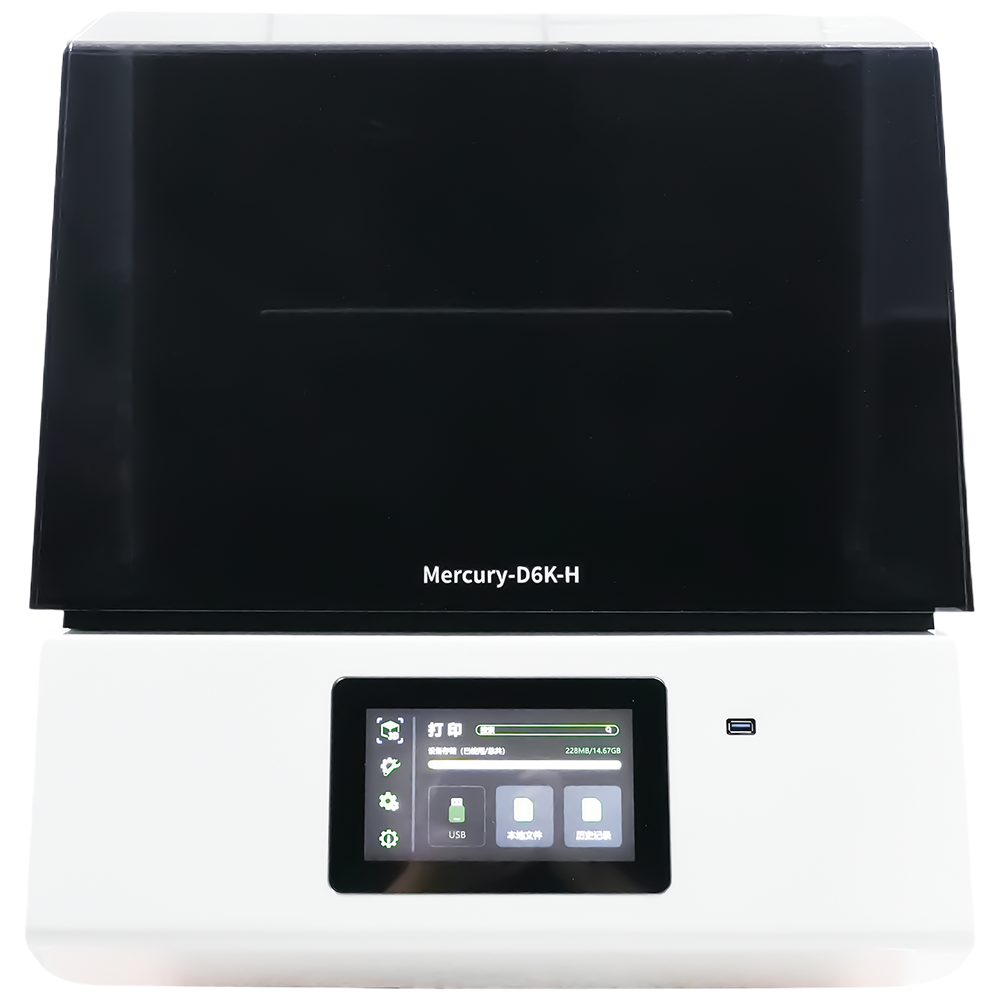
The Mercury-D6K-H provides a 288 × 162 × 120 mm build volume, 6480 × 3600 resolution, and 50 μm accuracy. Its 6K LCD printing system is designed to reproduce fine details for applications such as dental models, orthodontics, dental implants, rapid prototyping, and education.
Its heating function is also designed to support low-temperature printing requirements, helping users maintain a more consistent printing environment in different climates.
For users who need a high-precision resin 3D printer, the Mercury-D6K-H also supports workflow features such as Wi-Fi connectivity and scheduled printing. These features can make it easier to manage repeated printing tasks in professional environments.
Together with appropriate resin handling, cleaning, curing, and maintenance practices, these features can support a more controlled and efficient resin 3D printing workflow.
Conclusion
In conclusion, safety in resin 3D printing is paramount to achieving great results while protecting yourself and your workspace.
By taking precautions such as wearing protective gear, ensuring good ventilation, handling resin carefully, and performing regular maintenance, users can ensure the safe operation of the SoonSer Mercury-D6K-H.
Choosing the right resin 3D printer can also help create a more controlled and efficient printing workflow. For applications that require fine details and consistent results, the SoonSer Mercury-D6K-H combines 6K LCD printing, 50 μm accuracy, flexible workflow features, and a compact professional design.
At SoonSer, we believe that when safety, proper operation, and equipment performance are considered together, resin 3D printing can become a reliable solution for professional applications.

