



Automotive Parts Verification with SoonSer Industrial 3D Printing
15 January 2026
Industry Insights
As we support the fast-moving automotive field, SoonSer places great emphasis on early design verification. By applying 3d printing for automotive industry, we help teams review concepts before investing in full tooling. Our approach focuses on stability, accuracy, and predictable performance, allowing engineers to evaluate dimensions, assembly behavior, and surface quality in a controlled workflow. With our industrial SLA systems, we produce components that reflect the geometry and detail required for reliable engineering reviews. This capability forms a consistent foundation for developing new 3d printed automotive parts, giving manufacturers confidence as they move from concept toward production.
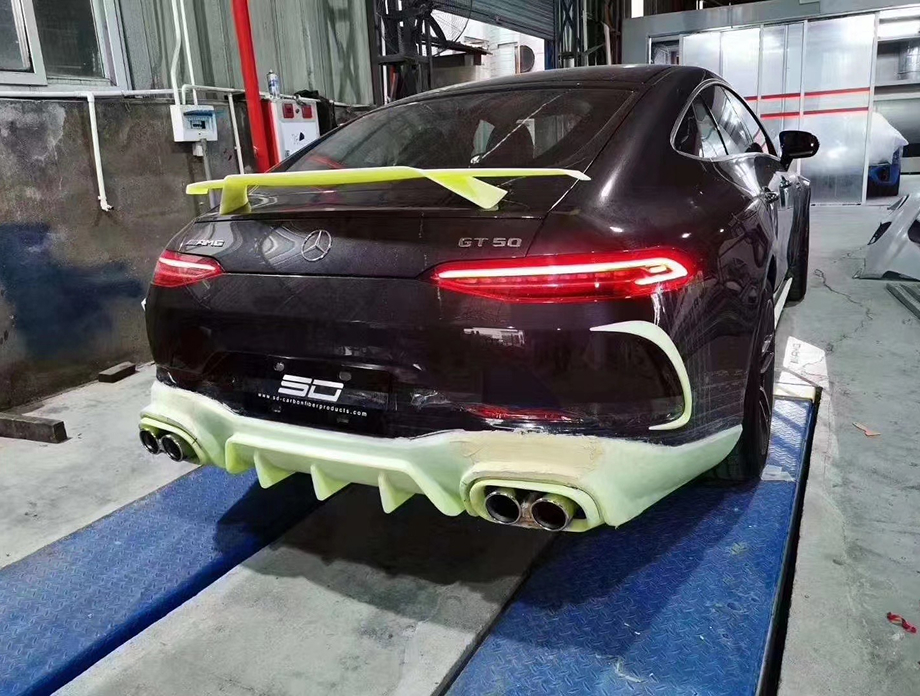
Industrial SLA Capabilities Designed for Automotive Needs
Our work with automotive users centers on the functional strengths of SLA technology. Through this process, we support repeatable builds for prototypes, fixtures, and test components. We apply 3d printing for automotive industry in situations where smooth surfaces, refined detail, and consistent tolerances matter. Our large-format systems, resin configurations, and stable mechanical structures allow us to handle wide panels, interior elements, design models, and verification samples. Each build reflects our focus on stable layer formation and controlled curing, ensuring that 3d printed automotive parts meet the expectations of teams working on appearance studies, ergonomic checks, or dimensional evaluations. By keeping material behavior predictable, we help users reduce uncertainty during early development stages.
Supporting Efficient Iteration and Custom Tooling
For automotive companies adjusting designs frequently, our SLA workflow keeps iteration efficient and clear. We apply 3d printing for automotive industry not only for exterior and interior prototypes but also for custom jigs, inspection aids, and shop-floor tools. These applications require stable performance during long build cycles, and our systems are structured to maintain uniform output across repeated jobs. When producing 3d printed automotive parts for aerodynamic studies, lighting concept checks, or fine-feature elements, we maintain the same process parameters to keep results consistent from one build to the next. This helps users shorten review loops while keeping design intent intact.
Conclusion: Streamlined Validation with Industrial SLA
Our approach to rapid automotive verification combines reliable equipment, controlled material performance, and a process built for consistent results. Through our industrial SLA 3D printers—including large-format SLA platforms and resin systems—we support the creation of 3d printed automotive parts that help teams confirm form, fit, and function with clarity. From rapid prototyping stereolithography to custom tooling and large-scale automotive applications, our solutions help manufacturers refine designs and move forward with confidence.

