



Precision Healthcare Prototyping: SoonSer SLA/LCD 3D Printing Innovations for Medical Devices
14 January 2026
Industry Insights
At SoonSer, we approach healthcare manufacturing with the goal of supporting precise and reliable product development. Our work with medical device 3D printing allows us to help teams prototype components that require accuracy, material consistency, and dependable surface quality. Through our SLA and LCD systems, we focus on creating a stable production environment that serves a wide range of medical and dental needs. As we collaborate with engineers and designers, we continue refining our workflow so that each prototype aligns with clinical expectations while remaining practical for repeatable manufacturing.
Supporting Functional Prototyping Through SLA/LCD Technologies
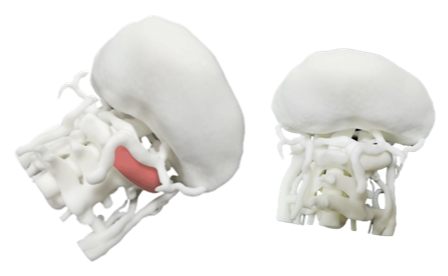
Our SLA and LCD solutions help us respond to requests for complex geometries, detailed surfaces, and smooth finishes—capabilities that are important when working with 3d printing medical devices. We use these technologies to prototype housings, fixtures, surgical preparation tools, dental models, and components that help healthcare teams evaluate shape, usability, and performance. By managing each stage internally, we can adjust build parameters, improve stability, and maintain consistent output for extended production cycles. The result is a dependable workflow that enables us to assist medical and dental partners as they test and refine their device concepts.
In addition to prototyping, we introduce our SoonSer 3D Printing Medical Solutions, which emphasize clarity, accuracy, and productive lead times. SoonSer systems are structured to support various medical development tasks without unnecessary complexity, allowing teams to adopt digital fabrication methods with confidence. Our approach combines controlled curing processes with material options suitable for visual models, ergonomic trials, and specific functional assessments.
Flexible Solutions for Healthcare and Manufacturing Teams
We understand that medical development often involves diverse project requirements. For this reason, we rely on SLA and LCD technologies to accommodate different part sizes, detail levels, and surface expectations. Our experience with medical device 3D printing also guides how we optimize the build environment, select materials, and adjust exposure settings. These considerations help us maintain stable output, which is especially valued by professionals in medical research, dental labs, and healthcare product development.
Our technology supports teams working on 3d printing medical devices, but it also offers value to industries such as automotive, electronics, footwear design, and artistic production. This overlap encourages us to keep our system stable, consistent, and suited for continuous operation, qualities that are relevant to both healthcare and broader manufacturing applications.
Conclusion: Continuing Innovation in Medical Prototyping
As we move forward, we remain committed to strengthening our SLA/LCD platform for teams exploring new ideas in medical device 3D printing. Through steady improvements and careful attention to user requirements, we aim to provide solutions that support clear communication, informed design decisions, and practical evaluation of 3d printing medical devices. With this approach, SoonSer will continue contributing to reliable medical and dental development workflows.

