



Large Scale SLA 3D Printer: Why Car Headlights and Center Console Prototypes Still Prefer SLA Technology
30 June 2026
Industry Insights
SLA technology remains the primary choice for producing car headlights and center console prototypes because it consistently delivers the high-precision surface finish and dimensional accuracy required for automotive validation.
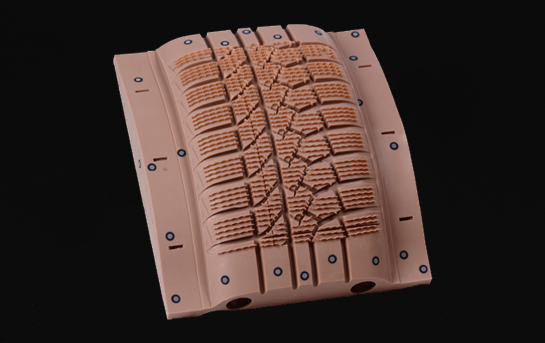
Precision Requirements for Automotive Lighting
When we develop automotive components, surface quality is non-negotiable. For a 3D printed car headlight, optical clarity and housing integrity are essential for testing assembly fitment and light refraction patterns. Traditional manufacturing methods often struggle to balance these complex geometric requirements within tight development schedules. At Soonser, we have observed that automotive engineers prioritize parts that require minimal post-processing to reach a functional state. The liquid resin process inherent to stereolithography provides an isotropic finish, which is critical when a large scale SLA 3D printer is utilized to create full-sized, transparent, or opaque housing assemblies. This level of detail ensures that the prototype behaves closely to the final injection-molded production part.
Streamlining Center Console Development
Integrating electronics and interior human-machine interface elements requires extreme dimensional stability. A center console prototype often features intricate snap-fit joints, mounting bosses for screens, and specific textures that must be reproduced accurately. Using a large scale SLA 3D printer allows our team to print these complex, oversized components in a single build, eliminating the error-prone process of bonding smaller sections together. By minimizing assembly, we reduce the risk of dimensional drift that can occur with multi-part gluing. This consistency is why manufacturers continue to rely on this specific additive process for interior development, ensuring that the interface panel fits perfectly within the vehicle chassis during early-stage testing.
Material Versatility and Production Scalability
Automotive parts must withstand various environmental conditions, from high-temperature durability tests to vibration and impact resistance. We work with materials that simulate the thermal and mechanical properties of final production thermoplastics. When printing a 3D printed car headlight or an interior panel, the ability to switch between clear, high-temperature, or impact-resistant resins is a significant operational benefit. Our Soonser hardware platforms support this material variety, enabling rapid iteration cycles that keep projects on schedule. By providing repeatable mechanical properties across large build volumes, the technology bridges the gap between early design concepts and final functional validation, allowing for a more efficient product development workflow in the automotive sector.
Ensuring Reliable Prototyping Outcomes
Consistency in output is the cornerstone of effective automotive prototyping. By utilizing a large scale SLA 3D printer to produce a 3D printed car headlight or complex interior components, we achieve the precise geometric control and material performance needed to validate designs before committing to expensive production tooling.

