



What Is SLA in 3D Printing and Why Is It Used in Industrial Manufacturing
12 May 2026
Industry Insights
When manufacturers ask “what is SLA in 3D printing”, the answer usually comes down to precision, surface quality, and production consistency. At SoonSer, we work with companies that require accurate prototypes and stable production workflows for automotive, electronics, footwear, and artistic applications. SLA 3D printing definition refers to a process that uses liquid resin and a laser system to build parts layer by layer through photopolymerization. This method is widely used when detailed structures, smooth surfaces, and dimensional stability are important for industrial development and product validation. Compared with many traditional prototyping methods, stereolithography 3D printing helps reduce manual finishing work while supporting complex geometries that are difficult to produce with standard machining processes.
How SLA Technology Supports Manufacturing Workflows
For many production teams, understanding the SLA 3D printing definition is closely connected to real manufacturing efficiency. In industrial environments, design revisions often happen quickly, especially in automotive and electronic product development. Our systems are designed to maintain operational stability during long printing cycles while supporting detailed prototype production. With stereolithography 3D printing, manufacturers can create functional appearance models, assembly verification parts, and concept samples with fine detail and consistent layer accuracy. At SoonSer, we focus on equipment reliability because stable output is often more important to factories and 3D printing service providers than aggressive marketing claims. This practical approach allows production teams to maintain smoother workflows while reducing interruptions during prototype development.
Tire Mold Manufacturing and Industrial Precision
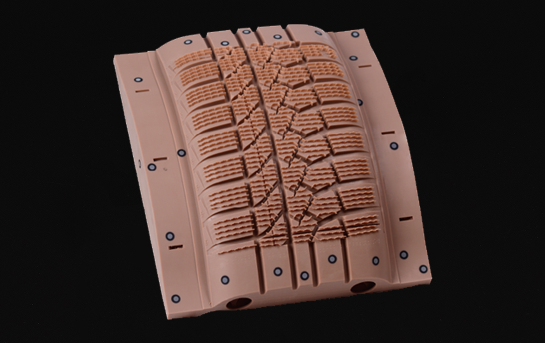
In tire development, mold accuracy directly affects tread verification and product evaluation. Our Tire Mold Manufacturing solution uses the SLA Mars Pro Series to support rapid prototyping stereolithography for intricate tire tread molds. The system achieves micron-level precision through industrial printing processes while helping manufacturers reduce production lead times and tooling costs. For companies exploring what is SLA in 3D printing, this application demonstrates how the technology can support highly detailed industrial projects beyond visual prototypes alone. In addition to tire mold applications, stereolithography 3D printing is also used in footwear mold creation, artistic sculpture development, and customized product modeling where surface smoothness and dimensional consistency are required. The flexibility of the process allows manufacturers and creative studios to adapt designs more efficiently during product iteration stages.
Why SLA Printing Remains Relevant for Industrial Users
As industrial prototyping requirements continue to evolve, many companies still rely on the core advantages found in the SLA 3D printing definition. The ability to produce detailed parts with stable performance makes this technology suitable for manufacturing environments that prioritize repeatability and product refinement. At SoonSer, we continue developing equipment that supports industrial users, 3D printing service providers, and creative professionals who require dependable output for daily operations. Whether the application involves tire mold development, consumer product modeling, or artistic production, what is SLA in 3D printing is ultimately a question about balancing precision, efficiency, and practical manufacturing needs. Through stable equipment operation and industrial-focused system design, we aim to help users integrate stereolithography 3D printing into real production workflows more effectively.

