



3D Printing in Manufacturing and Business Is Moving Toward Stable Industrial Production
11 May 2026
Industry Insights
Manufacturing companies and design studios are increasingly choosing systems that can maintain stable output during long production cycles, and this shift is changing how businesses evaluate additive manufacturing equipment. At SoonSer, we have seen growing demand for solutions that combine precision, repeatability, and practical workflow integration. An industrial SLA 3D printer is no longer used only for prototype verification. It is now part of daily production planning in automotive, consumer electronics, footwear, and creative industries where dimensional consistency and surface quality matter throughout the manufacturing process. At the same time, commercial 3D printing continues to expand because service providers and manufacturers need equipment that can handle multiple project types without interrupting production schedules.
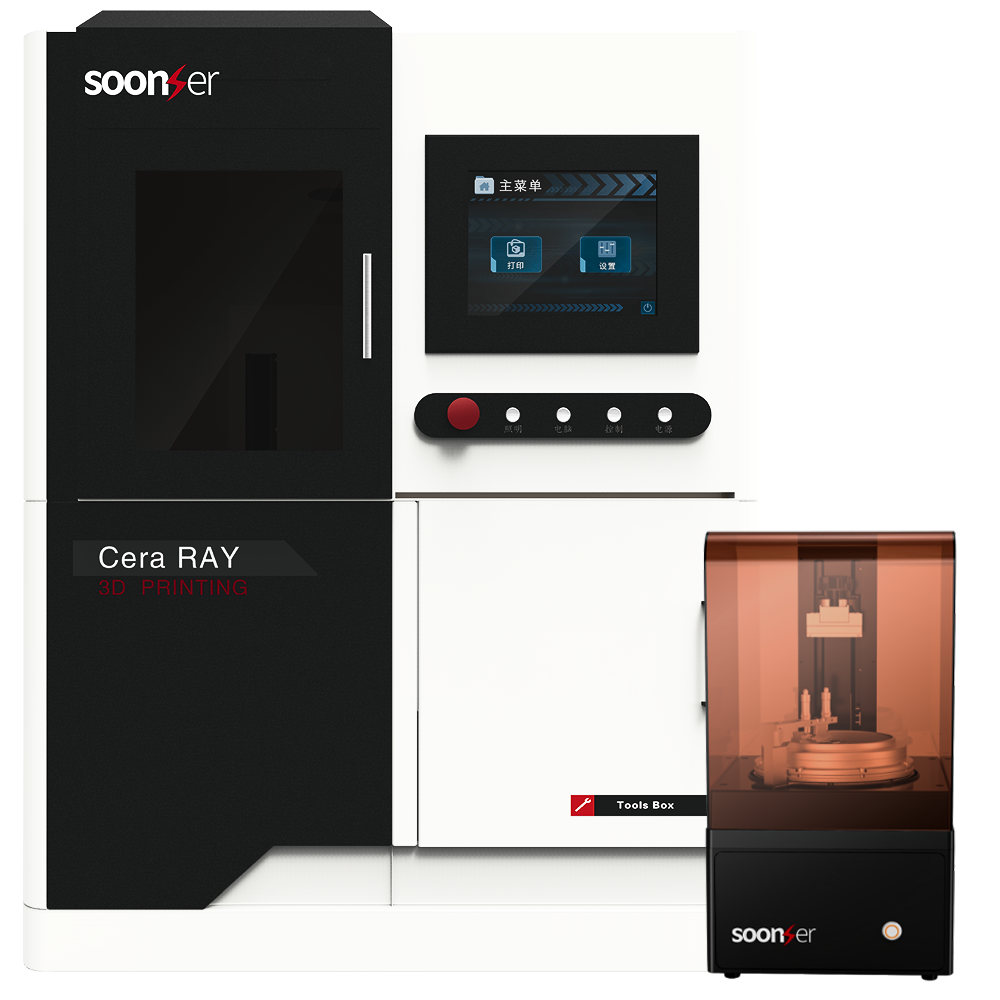
Stable Printing Performance Supports Manufacturing Workflows
In many factories and 3D printing studios, machine stability directly affects production efficiency. For this reason, manufacturers often focus on equipment reliability instead of only looking at print speed or build size. Our systems are designed to maintain steady operation during continuous printing tasks, which is especially important for automotive components, electronic product development, and footwear model production. A modern industrial SLA 3D printer must also support accurate layer formation and smooth surface results so post-processing time can remain manageable for production teams. As commercial 3D printing projects become more diversified, companies are also paying closer attention to workflow compatibility, resin adaptability, and long-term operational consistency when selecting equipment for daily use.
Ceramic Printing Expands Material Possibilities for Design and Industry
Material development is also influencing how businesses use additive manufacturing technology. Alongside standard resin applications, we provide ceramic printing solutions that support more specialized project requirements. The ceramic systems shown on our website are suitable for industries and creative teams that require detailed structures and fine surface performance for research, art design, or functional component development. These systems help broaden the application range of an industrial SLA 3D printer beyond conventional prototyping environments. In addition, ceramic printing technology is attracting attention from universities, design studios, and manufacturing laboratories involved in advanced material exploration. As 3D Printing in Manufacturing and Business continues to evolve, commercial 3D printing is becoming more connected to customized production and artistic manufacturing rather than only short-run prototype creation.
Manufacturing Businesses Continue to Prioritize Practical 3D Printing Solutions
The current manufacturing environment requires printing equipment that can fit naturally into existing production systems while supporting changing project requirements. At SoonSer, we continue focusing on practical machine performance, stable operation, and application-oriented development for industrial users and printing service providers. Whether companies are producing automotive parts, footwear models, electronic product samples, or artistic structures, an industrial SLA 3D printer remains an important tool for improving production flexibility and shortening design verification cycles. As more industries adopt additive manufacturing for daily operations, commercial 3D printing will continue evolving toward stable, application-focused production workflows that support both manufacturing efficiency and creative development.

