



Automotive Rapid Prototyping Validation and Assembly Testing
21 January 2026
Industry Insights
In automotive product development, rapid prototyping validation and assembly testing are critical steps that directly influence design accuracy and development efficiency. We work closely with automotive engineers, manufacturing teams, and 3D printing service providers who need reliable tools to verify part geometry, functional fit, and assembly logic before tooling begins. By applying sla 3d printer technology to automotive prototyping workflows, we help shorten validation cycles while maintaining the dimensional stability required for professional evaluation. Our focus is not on speed alone, but on delivering consistent prototype results that support informed engineering decisions during early-stage development.
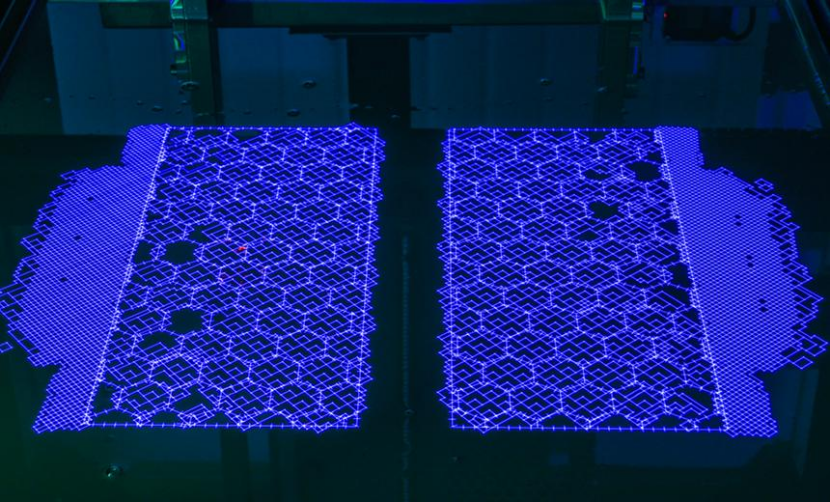
Dimensional Accuracy for Automotive Component Validation
Automotive components often include complex geometries, tight tolerances, and mating surfaces that must align precisely during assembly testing. Our experience shows that 3d printing prototyping using SLA technology is especially suitable for validating housings, brackets, interior components, and small structural parts where surface quality and accuracy matter. When producing prototypes for assembly checks, we prioritize stable printing behavior and repeatable results to ensure that multiple parts can be evaluated under the same conditions. This approach allows engineering teams to identify design issues early, reduce iterative modifications, and avoid unnecessary adjustments during later production stages.
Stable SLA Printing for Assembly Testing Scenarios
For assembly testing, prototype consistency is just as important as accuracy. Our SLA systems are designed to maintain stable performance across extended printing cycles, which is essential when producing multiple automotive parts for fit checks or small-batch verification. The SoonSer Mars Pro Series SLA printers are applied in these scenarios to support continuous prototyping without frequent recalibration. The system’s mechanical stability and controlled exposure process help ensure that parts printed for assembly trials maintain uniform dimensions, enabling engineers to evaluate real-world assembly behavior with confidence. This stability is particularly valued by automotive suppliers and service bureaus handling diverse prototype requirements.
Supporting Automotive Development with Practical SLA Solutions
In automotive development, rapid prototyping is not about showcasing technology, but about enabling practical validation and smooth collaboration between design and manufacturing teams. Our sla 3d printer solutions support this goal by offering reliable output for repeated design verification and assembly testing tasks. By integrating 3d printing prototyping into automotive workflows, we help teams test ideas earlier, communicate design intent more clearly, and reduce uncertainty before mass production. For automotive manufacturers, service providers, and creative professionals, our SLA systems provide a dependable foundation for prototype-based decision-making throughout the product development process.

