



Exploring High-Temperature Resins: Industrial 3D Printing for Extreme Environments
8 January 2026
Industry Insights
Growing demand for durable parts in challenging production environments motivates SoonSer to refine our approach to material selection and printing stability. Many of our customers across manufacturing, 3D printing services, and artistic applications require components that maintain their form under elevated temperatures. To address these needs, we incorporate high temperature resin 3D printing into workflows that involve extended thermal exposure or strict dimensional expectations. With the support of an industrial 3d printer, we manage detailed surfaces, functional prototypes, and visually demanding pieces within the same production framework. This combination allows us to maintain consistency while responding to diverse project requirements in fields where reliability matters.
Material Advantages for Extreme Conditions
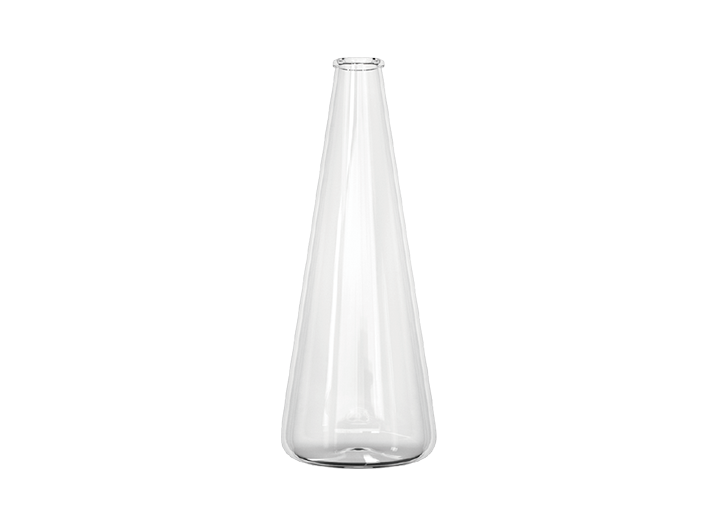
When preparing models intended for high-heat scenarios, we rely on high temperature resin 3D printing to help ensure parts remain stable during evaluation or repeated handling. Within our operations, each industrial 3d printer is adjusted to maintain uniform curing, which supports structural accuracy for elongated forms or intricate geometries. For applications exposed to extreme environments, we offer specialized high-temperature resins, while in scenarios that require visual clarity for design validation, our S-CL7001 high-transparency resin delivers distinct advantages. Although it is not categorized as a high-temperature material, its clarity and reliability allow us to integrate it into broader development cycles where visual inspection plays an important role. This illustrates our practice of aligning material performance with functional and aesthetic demands.
Balancing Precision, Efficiency, and Application Needs
Across industries such as automotive, electronics, footwear, and the arts, our teams frequently turn to high temperature resin 3D printing when thermal durability is central to a project’s success. The use of an industrial 3d printer helps us preserve fine details and maintain predictable part behavior during assembly tests or mold preparation. To keep production timelines manageable, we monitor curing profiles and adjust exposure strategies to achieve an efficient balance between accuracy and throughput. This method allows clients to evaluate performance-oriented parts without unnecessary delays, ensuring each model reflects dependable quality throughout its development cycle.
Conclusion
Applications involving heat exposure require materials that remain reliable under pressure. By combining high temperature resin 3D printing with the controlled output of an industrial 3d printer, we support manufacturers, service providers, and creative users who depend on stable and predictable parts in extreme environments. Through material selection and refined print management, we continue working toward components that meet the expectations of users facing demanding conditions and consistently deliver reliable performance for specialized technical needs.

