



How DLP 3D Printing Scales the Production of Customized Hearing Aids?
23 April 2021
Case Studies
The shift from manual craft to digital automation is the most significant evolution in modern audiology. Because customized hearing aids must match the complex anatomy of the ear canal, the "artisanal" manual methods of the past are no longer viable for ambitious companies looking to grow.
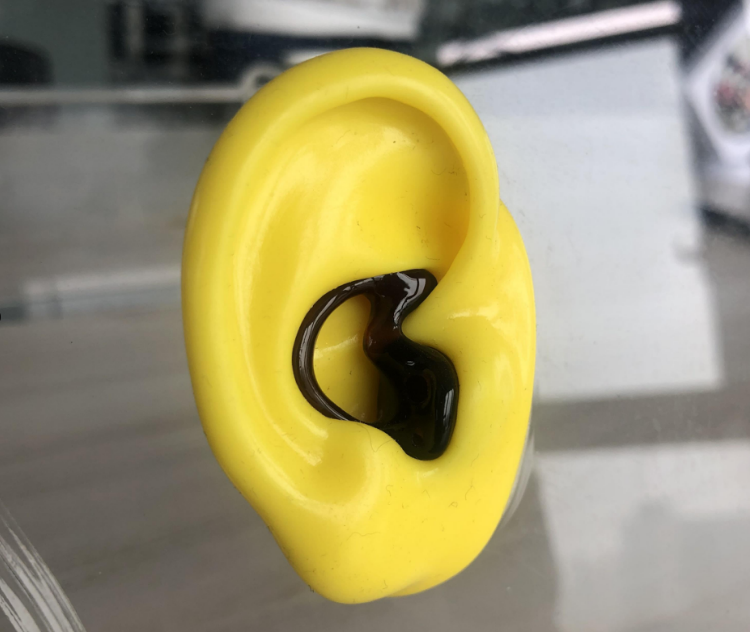
High-precision 3D scanning and DLP (Digital Light Processing) have become the new standards for producing custom earmolds and shells. This technology does more than just improve the fit; it eliminates the heavy overhead of traditional manual production. If you aim to lead the market, moving to a dedicated audiology 3D printer is the key to achieving consistent, high-volume production without compromising on the anatomical precision users expect.
Why DLP is the Gold Standard for Audiology 3D Printers?
For manufacturers looking to scale, DLP is the only technology that aligns with an industrial-grade production model. While both SLA and DLP use resins, the commercial results differ significantly:
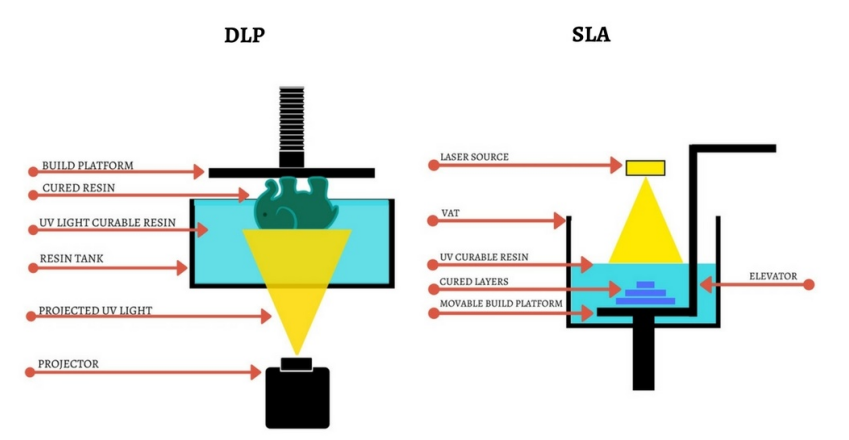
| Feature | SLA (Laser-Based) | DLP (Projector-Based) |
Print Speed | Linear (Increases with quantity) | Concurrent (Fixed time per batch) |
Edge Precision | Laser spots may blur fine contours | Uniform pixel distribution for sharp details |
| Throughput | Limited by single-point scanning | High-volume & Industrial scalability |
| Fit Consistency | Higher risk of dimensional drift | Perfect layer-to-layer alignment |
1. A Scalable Production Model: From Artisanal Craft to Industrial Efficiency
In a traditional or SLA-based lab, production speed is a bottleneck because it is linear—more parts mean more time. DLP technology breaks this bottleneck by enabling a truly scalable production model for custom made hearing aids.
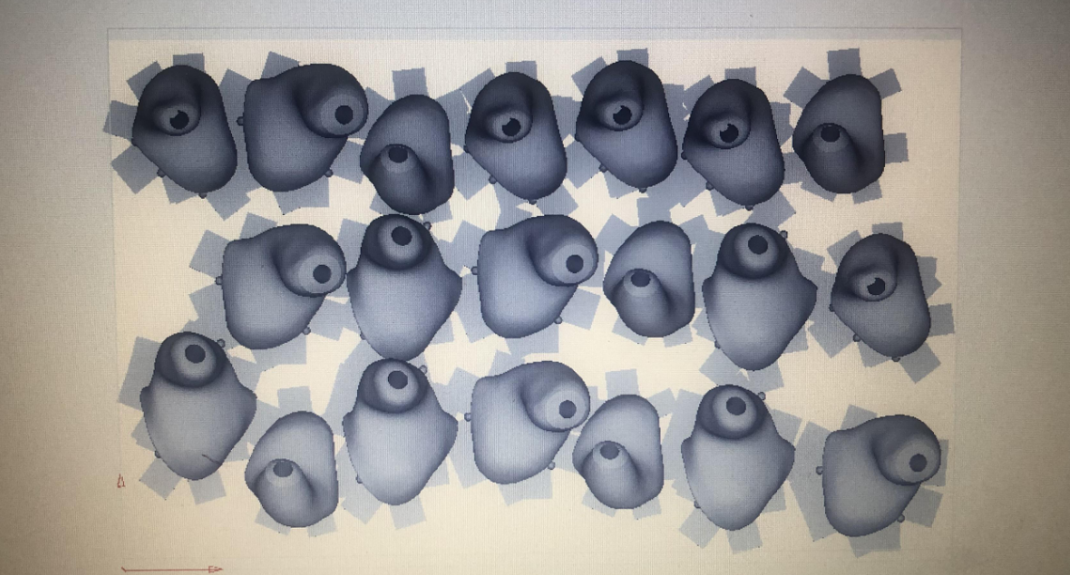
DLP utilizes area-array projection to cure an entire layer of resin in a single flash. Whether you are printing a single prototype or a full platform of 40 custom earmolds, the production time remains identical. By maximizing throughput per shift, you drastically reduce the labor cost per unit and increase your revenue capacity without adding extra machines.
2. Maximizing "First-Time Fit" Reliability: Reducing Remakes and Operational Costs
The hidden profit-killer in the industry is the "Remake Rate." When custom molded hearing aids do not fit perfectly, they cause acoustic feedback (whistling), leading to customer dissatisfaction and expensive re-manufacturing.
Our audiology 3D printer solutions provide micron-level consistency across the entire build plate. This ensures that the complex, organic geometry of an ear canal is captured perfectly every time. By delivering an elite acoustic seal from the very first print, you significantly reduce customer returns and eliminate the material waste associated with remakes.
Why choose DLP 3D printers for custom hearing aids?
Investing in an advanced hearing aid 3d printer delivers compounding advantages to your bottom line:
1. Dramatic Reduction in Turnaround Times
The traditional workflow requires up to 9 complex, manual steps (including wax casting, agar molding, negative mold preparation, and manual shell trimming).
With 3D printing technology, the process is streamlined into just a few digital steps—impression taking, scanning, designing, printing, post-processing, and assembly—which significantly shortens production cycles of customized hearing aids and enhances the patient's wearing experience.
2. Superior Comfort and Deeper Fits
3D scanning captures data points with micron-level accuracy, preventing the data loss that often occurs with physical silicone molds during transport or due to temperature fluctuations.
3D print hearing aid shells sit deeper and more comfortably in the ear canal without creating pressure points, drastically reducing the "foreign body sensation" and boosting patient compliance.
3. High Material Efficiency & Eco-Friendly Production
Traditional methods produce significant chemical and material waste from plaster bases and silicone negative molds. Digital manufacturing utilizes raw materials with pinpoint precision. By curing only the resin you actually need, you can effectively cut material costs, lower waste disposal fees, and help your brand meet modern ESG (Environmental, Social, and Governance) standards.
Case Story: How Hangzhou Tingoton Scaled Capacity
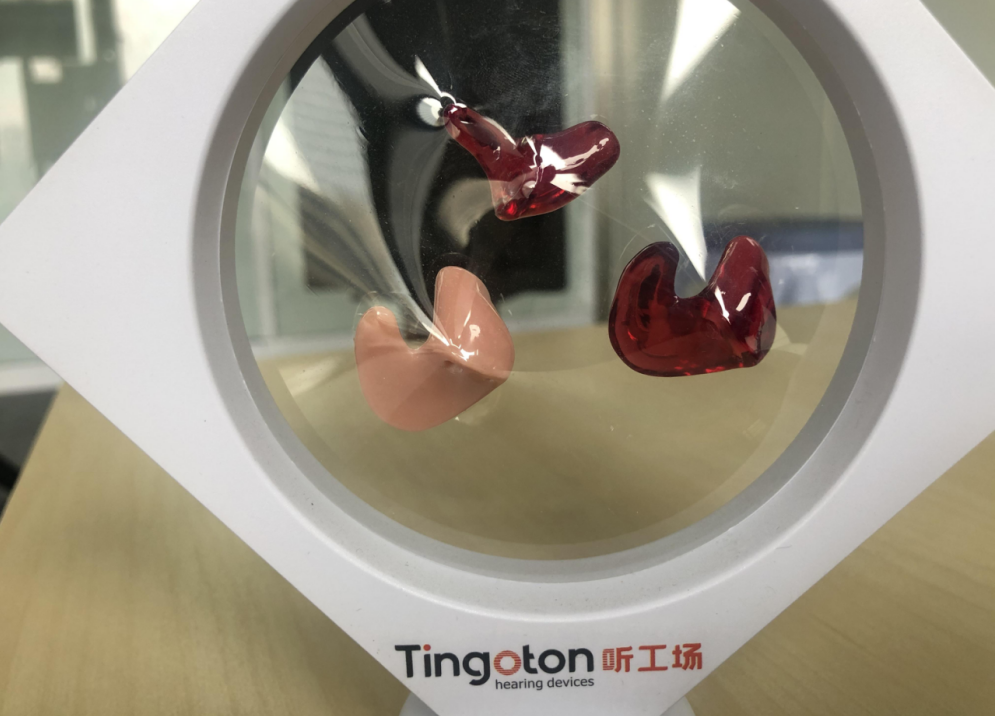
Hangzhou Tingoton, a leading medical device manufacturer specializing in high-end customized hearing solutions, faced the classic industry bottleneck: scaling up customized production without inflating labor costs.
In 2018, Tingoton initiated a digital transformation by integrating Soonser DLP 3D printers into their production lines. This shift from physical manual molding to a digital-first approach yielded immediate, game-changing results.
"In the past, manually fabricating a single custom ear mold took me nearly 2 hours of active, hands-on labor," explains Mr. Wang, a senior technician at Tingoton.
"Now, using our Soonser hearing aid 3d printer, I can print 40 models simultaneously in the same 2-hour window. Because the machine runs autonomously, I can free my hands to focus on high-value CAD design. Our lab’s throughput has increased dozens of times over."
Why Partner with Us for Your DLP Audiology 3D Printing Solution?
We go beyond selling hardware—we partner with you to establish a reliable, high-yield digital production ecosystem. Engineered for the strict standards of medical device manufacturing, our solution offers:
Biocompatible Resin 3D Printing: Seamlessly optimized for ISO-certified, skin-safe, and crystal-clear resins. Deliver long-term comfort and premium aesthetics, available in high-gloss clear, rose, and amber finishes.
24/7 Industrial Reliability: Built for non-stop, round-the-clock production. Our robust optical engines guarantee rock-solid consistency from the first build to the last.
Turnkey, End-to-End Support: We guide your team through every single step—from picking the right 3D scanner and mastering CAD software to perfecting print parameters and post-processing.
Ready to upgrade your production? Contact us today to send your inquiry or request a quote for your next audiology 3D printer!
Latest Press
-
16 January 2024
Excavating the Application of Wheel Mold, SoonSer Industrial 3D Printer Shines - Pioneering Company Jincheng Machinery Introduces Nearly 20 SoonSer Devices
Learn More


-
3 April 2023
Customer Case Clip: SoonSer Mars Pro 600 Industrial 3D Printer Accelerating R&D Process of Electronic Products
Learn More