



Why Large Industrial Parts Prefer SLA While Small-Batch Production Favors LCD/DLP?
4 July 2026
Industry Insights
The right printing technology depends on part size, production goals, and the level of detail required.
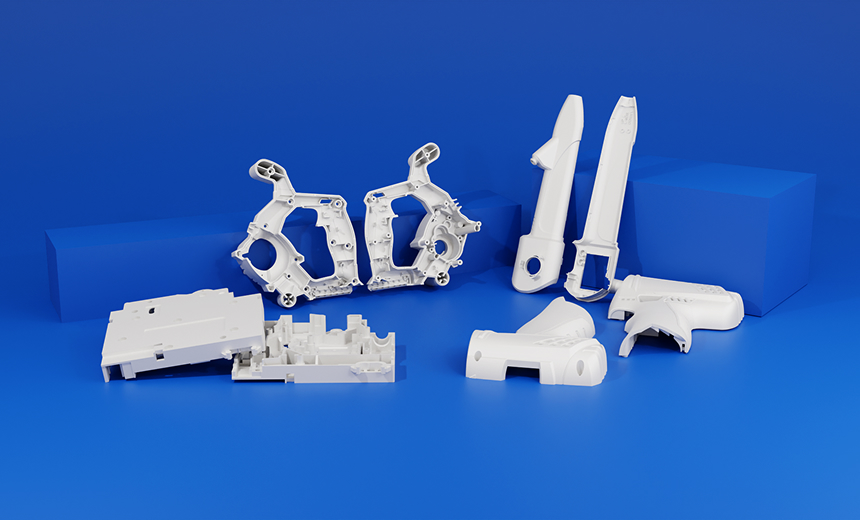
For manufacturers, 3D printing service providers, and creative studios, matching the printer to the application is an important step in achieving stable production results. We often see different requirements between large industrial components and small-batch parts. While some projects demand a larger build volume and consistent accuracy across sizable models, others focus on efficient production of smaller parts in greater quantities. At Soonser, we provide solutions for both scenarios through our SLA and LCD printer lines, helping users align equipment capabilities with actual production needs.
Large Parts Benefit from the Advantages of SLA Technology
When producing large industrial models, print size is often one of the primary considerations. A large format SLA 3D printer offers a spacious build area that supports the fabrication of bigger components without dividing them into multiple sections. This can reduce assembly work and help maintain dimensional consistency across the entire part.
The Mars Pro Series is designed for applications that require large-scale printing capabilities. Its build volume allows users to create sizeable prototypes, molds, and functional models for industrial applications. For manufacturers working with larger structures, a large format SLA 3D printer can also contribute to smoother workflows by minimizing the need for post-processing associated with segmented prints.
In addition to size capacity, SLA technology is widely recognized for producing smooth surface finishes and fine details. These characteristics are valuable in industries where appearance, fit verification, and precision are important factors during product development and production preparation.
LCD Technology Supports Efficient Small-Batch Production
For smaller components produced in batches, productivity often becomes the focus. An industrial LCD 3D printer is well suited to this type of work because it can print multiple parts simultaneously within the available build area. This approach can improve production efficiency when users need repeated quantities of detailed parts.
The Mercury-D6K is developed to support professional resin printing applications. Its high-resolution LCD system enables the creation of detailed models while maintaining production consistency. For service bureaus handling multiple customer orders, an industrial LCD 3D printer can provide a practical balance between output quality and throughput.
In sectors such as arts, design, and customized manufacturing, small-batch production frequently requires a combination of detail accuracy and operational efficiency. LCD printing technology helps address these requirements by supporting the production of numerous small components within a single print cycle.
Matching Printer Capabilities to Application Requirements
Different projects naturally lead to different equipment priorities. A large format SLA 3D printer is often preferred when users need larger build dimensions, smooth surfaces, and reliable performance across substantial models. These strengths make SLA suitable for industrial prototypes, tooling patterns, and large-scale display pieces.
On the other hand, an industrial LCD 3D printer is commonly selected when production involves multiple smaller parts that must be manufactured efficiently while preserving detail quality. This can be particularly useful for 3D printing services, creative production environments, and manufacturing applications with recurring small-part demand.
At Soonser, we understand that no single technology fits every production scenario. By offering both SLA and LCD solutions, Soonser helps users identify the equipment that aligns with their specific operational goals and production requirements.
Large industrial components and small-batch production tasks often require different technical approaches. SLA technology provides significant advantages for larger models through expanded build capacity and refined surface quality, while LCD technology supports efficient production of smaller detailed parts in quantity. By evaluating part size, production volume, and application needs, users can determine whether a large-scale SLA system or an LCD solution is the more suitable option for their workflow.

