



Remote Monitoring and Diagnostics: Enhancing the Efficiency of Industrial 3D Printers
18 January 2026
Industry Insights
As SoonSer, we focus on creating practical tools that support manufacturing, service providers, and artistic studios. In our daily work with customers, we see how important it is to manage equipment efficiently. By integrating remote 3D printer monitoring into our workflow, we help users follow printing progress without staying beside the machine all the time. This approach supports a smoother production rhythm, especially for teams handling multiple machines or handling long-hour builds. As an industrial 3d printer provider, we understand that stable output matters more than anything else, and remote access allows users to react quickly whenever adjustments are needed.
Strengthening Process Reliability With Real-Time Diagnostics
When businesses depend on high-precision parts, reliability becomes essential. Our use of remote 3D printer monitoring offers operators a clear view of machine behavior while production is ongoing. For many customers, the ability to check system status, material usage, and temperature behavior helps reduce unexpected pauses. This is particularly useful for companies relying on an industrial 3d printer for continuous operation. Through timely alerts and accessible diagnostic data, teams can prepare maintenance ahead of time and keep printing schedules on track. These functions help reduce disruptions while giving users confidence in every production cycle.
Supporting Complex Applications With Stable Equipment
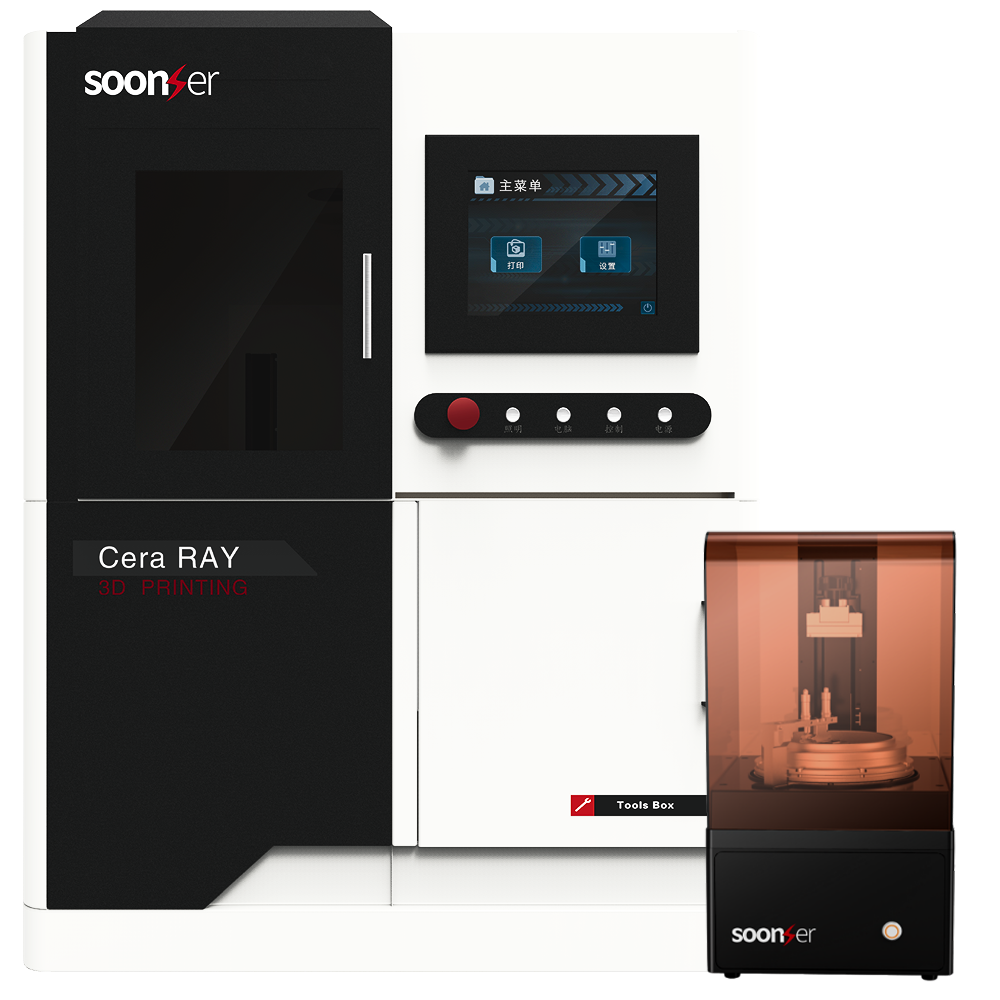
Different industries—automotive, electronics, footwear, and creative studios—require consistent performance when producing prototypes or functional components. Our SoonSer equipment is designed to support this type of work environment, especially when paired with remote 3D printer monitoring. The CeraRay Series Ceramic 3D Printers fits well into this framework. In high-end manufacturing fields, SoonSer is actively exploring the potential of advanced materials such as ceramics in 3D printing to meet increasingly complex industrial requirements in the future. When these printers operate as part of a connected setup, customers using an industrial 3d printer can maintain a balanced workflow, even when producing uncommon geometries or working with demanding materials.
A Practical Path Toward Higher Operational Efficiency
From our experience, combining stable hardware with accessible digital tools gives teams a practical advantage. With remote 3D printer monitoring, we offer users a way to manage their equipment in a more organized manner without altering their established production habits. Our goal as SoonSer is to help users operate their industrial 3d printer systems with confidence, clarity, and minimal interruption. By supporting remote access and clear diagnostics, we aim to provide a dependable direction for improving daily production efficiency while keeping the process simple and manageable.

