



The Next Step in Batch Manufacturing: Scaled Industrial 3D Printing Solutions
6 January 2026
Industry Insights
As manufacturing continues to evolve, we see increasing demand for systems that support larger production cycles without sacrificing consistency. By integrating scaled 3D printing solutions, we have adapted our workflow to meet this shift. The approach allows us to manage diverse applications while keeping attention on part accuracy and operational steadiness. For companies focused on wider production needs, a solution that keeps both detail and pace balanced becomes essential. This is the direction in which our work has developed, and it aligns with the way industries seek adaptable tools that can support batch-level throughput. Our use of the SoonSer platform strengthens this direction as we continue refining our process.
Deploying a Large Industrial 3D Printer in Real Manufacturing Settings
When customers look for ways to increase output while retaining precise part geometry, a large industrial 3d printer offers a meaningful path forward. We use this capability to support manufacturers in segments such as automotive, footwear, electronics, and creative design. The format gives room for broader components, multiple-part layout planning, and steady day-to-day operation. As we scale these setups, the flexibility of a large industrial 3d printer also helps us react quickly to design adjustments or short-run production needs. This approach works especially well in environments that require predictable performance, and it continues to guide our internal planning as we build further scaled 3D printing solutions into our workflow.
Applying Scaled 3D Printing to Footwear and Creative Applications
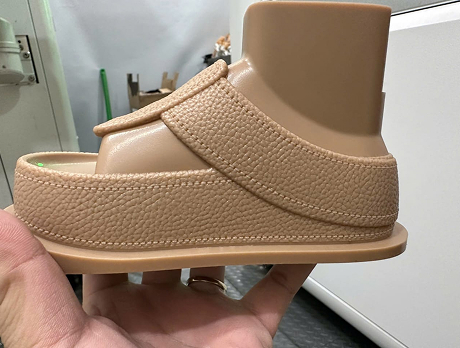
Our experience shows that scaled 3D printing solutions create value when applied directly to real production tasks. In footwear manufacturing, SLA 3D Printing for Footwear allows us to work with detailed shoe molds and design samples with steady accuracy. We use the method for rapid prototyping and customized model exploration, supporting designers as they test new structures or adjust functional features. This role becomes even more effective when supported by a large industrial 3d printer, which provides the build space needed for full-size molds or multiple variations. The broader structure of scaled 3D printing solutions reinforces our ability to respond to demands from creative fields as well, where shape, surface clarity, and repeatability are often essential.
Conclusion
As industries move toward wider and more flexible production cycles, scaled 3D printing solutions offer a practical next step. The combination of refined SLA processes and the capacity of a large industrial 3d printer allows us to address both development and batch-oriented tasks with consistent control. By continuing to integrate these tools across footwear, manufacturing, and creative work, we maintain a steady path toward efficient and adaptable production.

