



The Role of Ceramic 3D Printers in Scientific Research and High-End Manufacturing: SoonSer's Approach
11 October 2022
Buyer's Guide
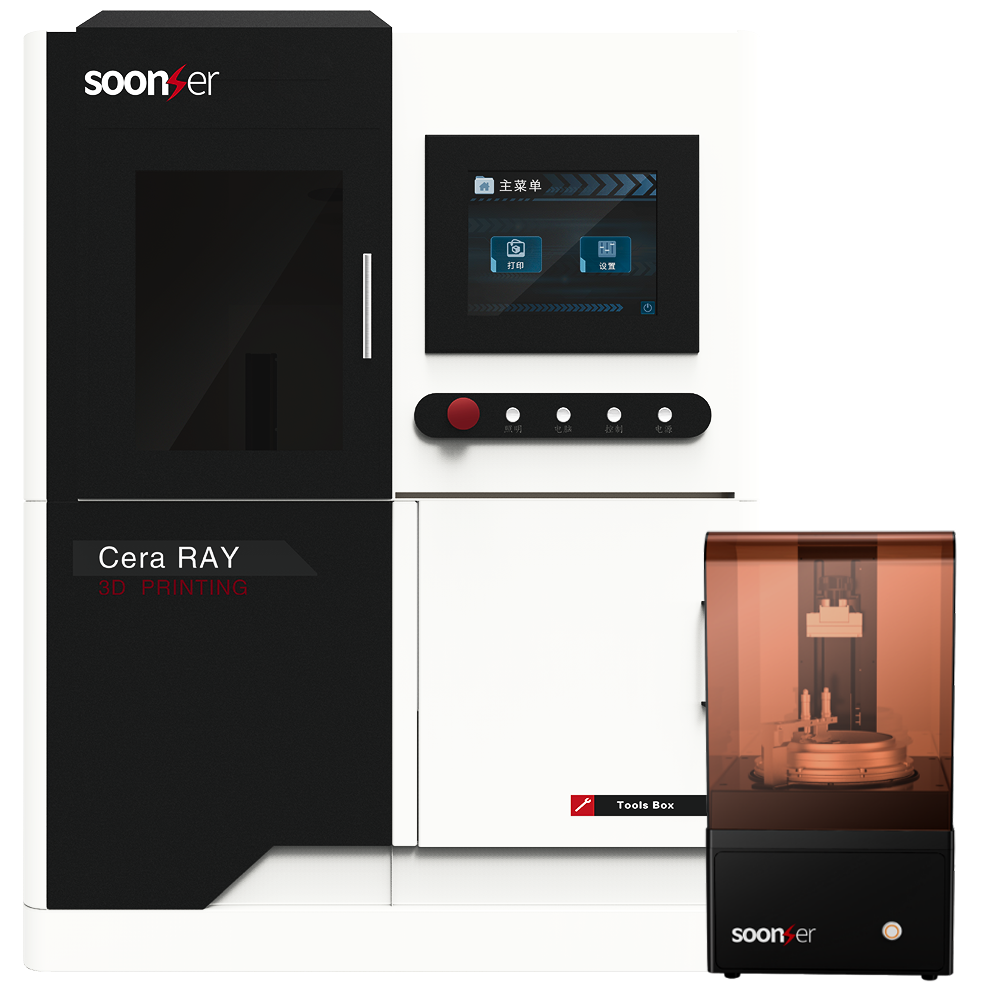
At SoonSer, we believe the future of ceramics lies in precision, functionality, and advanced materials science. That’s why we developed the CeraRay Series ceramic 3D printer, designed to redefine what is possible with ceramic resin 3D printing. Beyond just shaping objects, this technology leverages the inherent strengths of ceramics—high temperature resistance, excellent mechanical strength, and unique functional properties—to meet the demanding needs of both scientific research and high-end manufacturing.
Material Characteristics That Unlock Possibilities
The defining feature of our ceramic 3D printer is how it brings out the natural performance of ceramic materials. Ceramics can withstand extreme temperatures, making them indispensable for aerospace engine components, laboratory equipment, and advanced filtration systems. Their high strength and chemical stability also make them ideal for use in harsh industrial environments.
Through ceramic resin 3D printing, we combine these material properties with the freedom of additive manufacturing. This means researchers and manufacturers can fabricate parts that are not only durable but also designed with unprecedented complexity—whether it’s porous filters with controlled microstructures, dental implants requiring biocompatibility, or electronic substrates needing excellent insulation performance.
Applications in High-End Functional Manufacturing
High-end industries demand more than just precision; they demand functionality at scale. Our ceramic 3D printer empowers businesses to create components that directly support next-generation technologies.
Aerospace: Lightweight, heat-resistant ceramic parts enable engines and turbines to operate efficiently at extreme conditions.
Medical: Biocompatible dental restorations, prosthetics, and surgical tools benefit from ceramics’ ability to combine strength with safety.
Electronics: Ceramic substrates and insulators produced through ceramic resin 3D printing ensure stability and performance in high-frequency or high-voltage applications.
These are not prototypes alone—they are functional, end-use parts that meet stringent industry requirements.
Scientific Research and Iterative Design
In research environments, the ability to iterate quickly is as important as the final performance. Traditional ceramic manufacturing requires molds, tooling, and extensive machining, which slow down discovery. By contrast, the CeraRay ceramic 3D printer eliminates these barriers. Researchers can now design, print, test, and refine advanced ceramics within days, enabling faster breakthroughs in materials science, energy storage, and biomedical research.
This rapid cycle is made possible by the synergy of our hardware and ceramic resin 3D printing materials, which allow controlled porosity, fine detail resolution, and consistent reproducibility. For scientists, this means pushing experiments further; for manufacturers, it means faster innovation pipelines.
Conclusion
Ceramic technology is no longer limited to traditional molds or basic applications. With the CeraRay Series ceramic 3D printer, SoonSer is showing how ceramic resin 3D printing can bridge the gap between scientific research and high-end functional manufacturing. From aerospace components to medical devices and advanced electronics, ceramics are proving to be the material of choice where strength, stability, and performance are critical.
Our mission is simple: to give industries the tools they need to explore the full potential of ceramics. With SoonSer, innovation doesn’t stop at design—it extends into real-world applications where precision and functionality define success.

